
Reviewed · AKROTIRI TOURS
Santorini , Akrotiri tour by a licensed guide
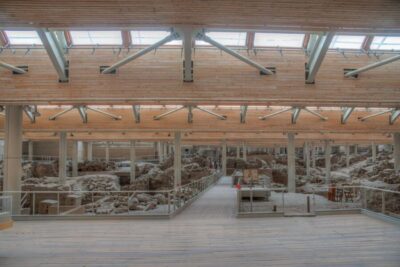
Akrotiri is a Bronze Age town preserved beneath volcanic ash for nearly 4,000 years. On this private visit, you walk among the excavated remains of a settlement that gives a rare look at everyday life around 2000 BC, before a major eruption buried it.
I like two things here: a licensed guide can make the ruins legible, explaining how homes, kitchens, toilets and drainage fit together, and the private format gives your group room to ask questions. The guide can also put current historical thinking into context, rather than leaving you to puzzle over walls and foundations alone.
One consideration: the €213 group price does not include admission, which costs €12 per person. The visit is brief, too, so it suits a focused stop more than a leisurely, all-day archaeological outing.
- A town beneath the ash: Akrotiri was buried by a volcanic eruption around 1600 BC and remained covered for almost 4,000 years.
- Homes with surprising detail: Excavations have revealed two- and three-storey buildings, plus traces of kitchens and toilets.
- A practical engineering story: The settlement had a drainage system that your guide can help you understand.
- Private attention: Only your group joins the tour, with a licensed tourist guide.
- Budget for the extra fee: Admission is €12 per person, on top of the $213 group price.
- A short, focused visit: Allow about 1 hour to 1 hour 15 minutes for the guided experience.
What Akrotiri’s ash preserved
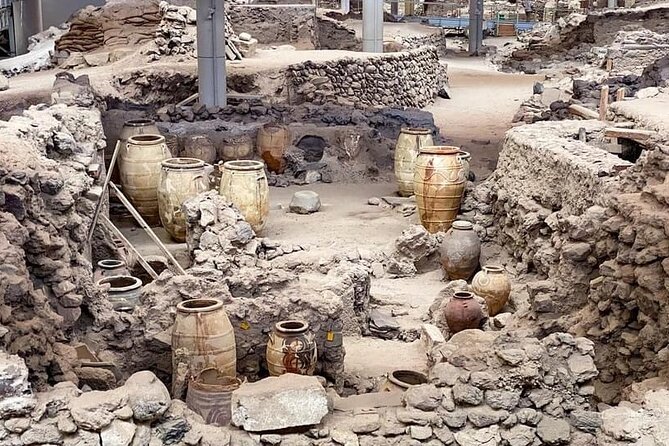
At Akrotiri, the volcanic eruption is not just a dramatic ending to the story. It is the reason the remains survived. A thick layer of volcanic material covered the settlement, leaving behind a remarkable record of its buildings and urban layout.
The town offers a window into life in the Bronze Age, around 2000 BC. You are not simply looking at one landmark or a single grand ruin. You are walking through the excavated remains of a community, with buildings and household features that help make daily life easier to picture.
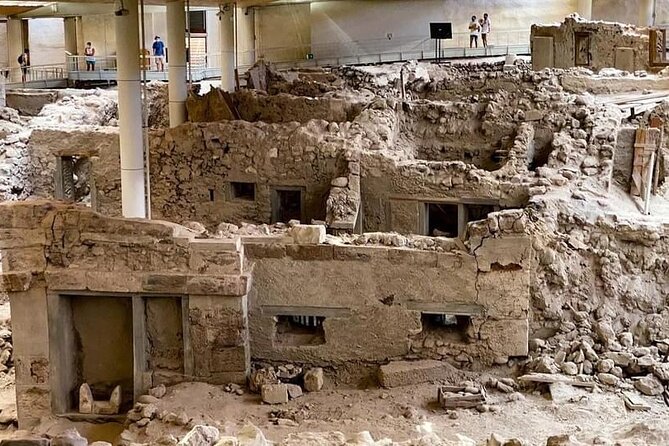
That distinction matters. Ruins can feel abstract when all you see are low walls and fragments. Here, the evidence includes the outlines of two- and three-storey buildings, along with remains of kitchens and toilets. A guide can connect those details to the people who used the spaces and explain what archaeologists think the settlement may have been like.
The eruption happened around 1600 BC, and the town stayed buried for almost 4,000 years. It was discovered accidentally during work to obtain Santorini’s volcanic soil for building and insulating the Suez Canal. That unusual link gives the site a second story: Akrotiri’s rediscovery began not with a planned search for an ancient city, but with a practical construction project.
Walking through the excavated settlement
The tour focuses on the Akrotiri Archaeological Site. You spend roughly an hour there, with the overall experience listed at about 1 hour 15 minutes. That is enough for a guided introduction to the settlement, though not a reason to expect an exhaustive study of every feature.
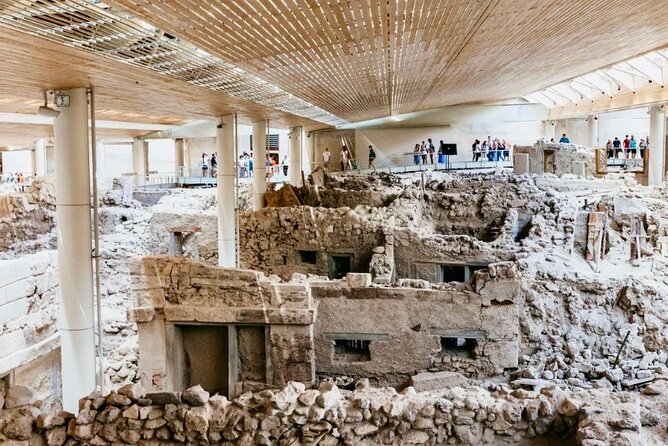
As you walk, the guide can point out the remains of the town’s dense urban planning. The layout is part of the interest: Akrotiri was a settlement with buildings close together, not an isolated monument set apart from daily life. Seeing the excavated structures in relation to one another helps you imagine how people moved through their community.
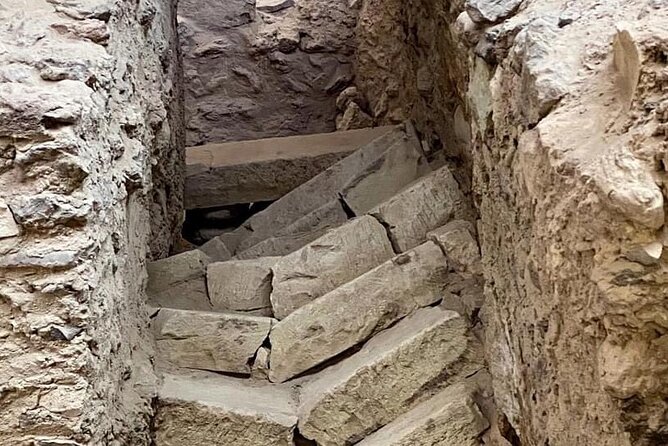
Look for the traces of domestic life. The remains of kitchens and toilets give the site a human scale, while the two- and three-storey buildings hint at a built environment more complex than a scattering of simple shelters. The structures are not intact homes, so you will need some imagination. That is where a good explanation makes a real difference.
The drainage system is another detail worth your attention. It is easy to pass over practical infrastructure in an archaeological site, but it says a lot about how a settlement functioned. Your guide can explain the system and help you see the ruins as a working town, not just old stonework.
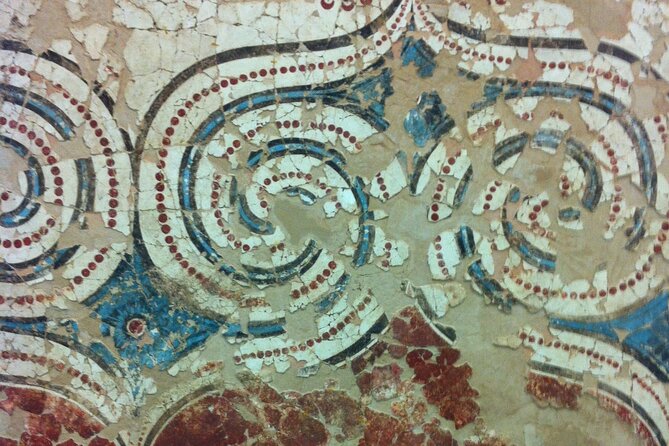
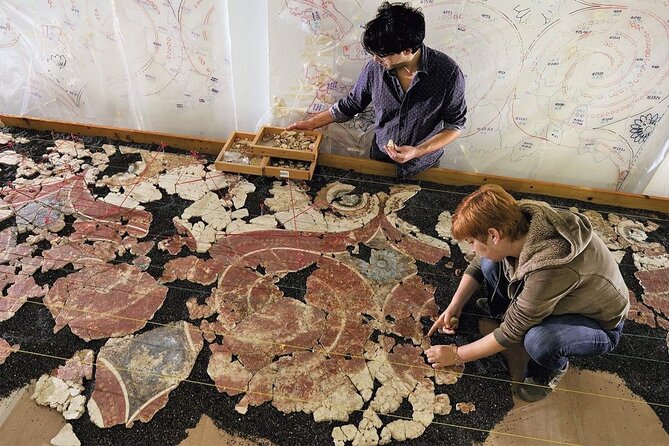
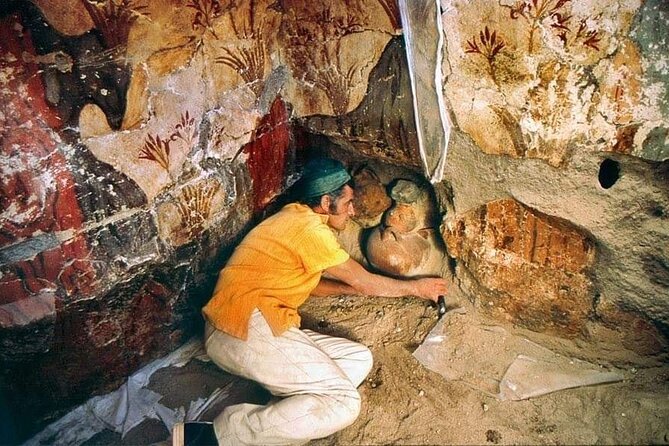
The walls once held vivid frescoes, though the tour description does not promise that you will see the original paintings in place. The useful point is that these works were part of the town’s interiors and added color to spaces now reduced to excavated remains. Ask your guide what is known about the frescoes and what evidence survives.
More Akrotiri trips in Santorini:
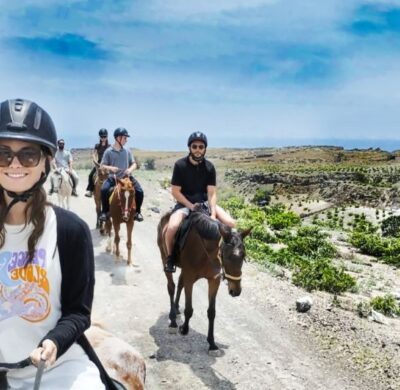
- Akrotiri: Guided Horseback Riding Day Trip to a Beach
★ 4.9 · 477 reviews - Santorini: Akrotiri Entry Ticket and Audio Guide
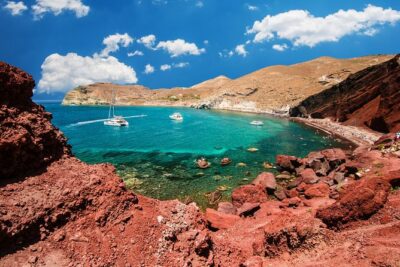
★ 3.9 · 348 reviews - Archaeological Bus Tour To Akrotiri Excavations & Red Beach
★ 4.6 · 280 reviews
Why a licensed guide adds value
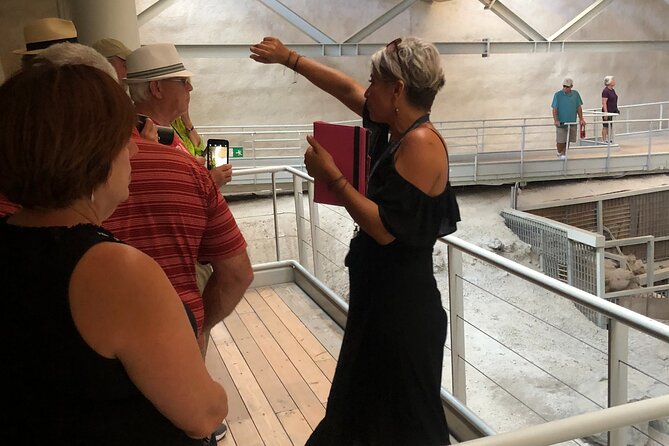
Akrotiri rewards explanation. A wall or a drain may be interesting on its own, but the bigger story comes from learning how the pieces relate to the settlement’s culture and society. A licensed guide can also answer questions as they arise, which is especially helpful when you want more than a quick overview.
The guiding is private, so only your group participates. That makes this a good choice if you want to set the pace through questions or need explanations tailored to different ages and levels of interest. It also means the guide’s attention is not divided among unrelated groups.
The tour’s strongest appeal is the way a guide can turn a short visit into a clear picture of the community. Families in particular may appreciate that approach: the buildings, household facilities and eruption are concrete subjects that give children something to notice and ask about. The site itself is fascinating, but the guide helps keep the visit from becoming a string of unexplained remains.
No guide’s name is provided, so you cannot request a particular person based on the available details. What you can expect is a licensed tourist guide who can address questions and explain current historical thinking about the ruins, the island and the people who lived here.
The eruption and the long gap beneath the ash
Akrotiri’s burial is central to the visit, but it is worth treating the eruption as more than a single dramatic fact. The volcanic material covered the town and sealed it away for millennia. That long period beneath the ash is what makes the settlement so striking as an archaeological site.
The exact experience is not a lecture about geology. Rather, the eruption provides the frame for understanding why the remains are here and how the town disappeared from view. Your guide can connect that event to the archaeological evidence and describe what is known about the settlement’s inhabitants and culture.
The excavation story adds an unexpected twist. Volcanic soil from Santorini was being gathered for use in construction and for insulating the Suez Canal when the buried settlement was accidentally found. That detail is a reminder that archaeological discoveries do not always begin with a grand plan. Sometimes a practical job opens a door to a much older past.
You should arrive ready to look closely and ask questions. This is a compact guided tour, not a long walk through multiple sites. Its strength is concentration: one important place, a clear timeline and a guide who can help you connect the evidence.
What the $213 group price includes
The tour costs $213 per group, for up to 10 people. Admission is separate at €12 per person, so include that added cost when comparing the experience with other ways to visit. The tour fee covers the licensed guide, not entry to the archaeological site.
For a full group of 10, the guide fee works out to $21.30 per person, before admission. With fewer people, the cost per person rises, so the format makes the most financial sense for a family or small group travelling together. The private setting has a practical benefit as well: your group can ask questions without competing for the guide’s attention.
The value depends on how you like to visit archaeological sites. If you are happy to look around independently, the extra guide cost may not be essential. If you want help understanding the buildings, drainage, household remains and history of the eruption, the guide is the part that makes this experience distinct.
The experience is booked, on average, 54 days ahead. That is useful to know if you have fixed dates in Santorini, though it is an average rather than a rule. Confirmation is provided within 48 hours of booking, subject to availability.
More guided departures in Santorini:
- From Heraklion/Crete: Santorini Island Guided Day Trip
★ 4.4 · 1,448 reviews - Santorini: Sunset Guided Tour with Hotel Pickup
★ 4.8 · 900 reviews - Santorini Luxury Custom Private Tour with Local guide
★ 5.0 · 623 reviews - Fira: Guided Foodie Walking Tour with Tastings
★ 4.9 · 474 reviews
Timing, meeting point and a few practical notes
The stated duration is approximately 1 hour 15 minutes, while the site visit itself is listed as 1 hour. Treat that as a short, focused tour and leave some flexibility around it rather than planning a tight connection immediately afterward.
The meeting point is in Santorini, and the activity ends back there. The listed opening hours run daily from 8:30 AM to 3:30 PM for the period shown in the tour details. Check the hours for your date when planning, as opening times and availability can change.
The archaeological-site entrance fee is not included. Bring €12 per person for admission, in addition to the group tour cost. The tour is described as suitable for most participants, service animals are allowed, and the meeting point is near public transportation.
There is free cancellation if you cancel at least 24 hours before the start time. Cancellations made less than 24 hours in advance are not refunded, and changes within that same 24-hour window are not accepted. The cut-off follows local time.
Who will get the most from Akrotiri
I would choose this tour if you enjoy history but do not want to spend your visit decoding archaeological remains alone. The licensed guide is especially useful for turning the practical details, such as household facilities and drainage, into a picture of how the town worked.
It is also a strong fit for families and small groups who want a shared, manageable outing. The visit is short, the subject is easy to discuss together, and the private format allows everyone to ask questions. The guide can help make the settlement vivid without requiring you to arrive with specialist knowledge.
If you are mainly interested in scenic stops or want a long, unhurried archaeological visit, this may not be the best match. The experience is focused on one site and lasts about an hour to 75 minutes. You will also need to pay the entrance fee separately.
For the right visitor, the cost buys more than a guide walking beside you. It buys context for a place where much of the story lies in foundations, plans and traces of domestic life. If that is the kind of history you like, Akrotiri is a worthwhile stop.
Should you book this Akrotiri tour?
Book it if you want to understand what you are seeing, value a private guide and have a group of several people to share the cost. The strongest reason to go is the chance to connect the buildings, household remains and drainage system to life in the town before the eruption.
Consider visiting independently if you prefer to explore at your own pace and are content with a shorter, less guided introduction. Either way, remember to add €12 per person for admission. For a compact, guided encounter with Santorini’s prehistoric past, this tour offers a clear and practical way into Akrotiri.
FAQ
How long does the tour last?
The experience is approximately 1 hour 15 minutes. The visit at the archaeological site is listed as about 1 hour.
How much does the tour cost?
The price is $213 per group, with up to 10 people. The Akrotiri entrance fee is extra at €12 per person.
Is the entrance fee included?
No. You pay the €12-per-person entrance fee separately.
Is this a private tour?
Yes. Only your group participates, and the tour is led by a licensed tourist guide.
Where does the tour start and end?
It starts at the listed meeting point in Santorini and ends back at the same meeting point.
What can I see at Akrotiri?
The excavated settlement includes remains of two- and three-storey buildings, kitchens, toilets and a drainage system. The town was buried under volcanic material after an eruption around 1600 BC.
What is the cancellation policy?
You can cancel at least 24 hours before the start time for a full refund. Cancellations or changes made less than 24 hours before the experience are not accepted for a refund or change.
Latest additions in Santorini
- Santorini Half Day MotorCruiser Private Cruise incl. Meal,Drinks &Free Transport★ 5.0 · 7 reviews
- Private Santorini Villages Morning Walking Tour inc. tastings★ 4.5 · 8 reviews
- Santorini Luxury private tour for small groups★ 5.0 · 7 reviews
- The Fastest Private Motor Yacht in Santorini – All Inclusive Tour★ 5.0 · 25 reviews
- Small Group Local Wine Tasting Tour In Santorini★ 4.5 · 7 reviews
- Santorini L.P. Photography Session★ 5.0 · 19 reviews
- Santorini Luxury Catamaran Private Cruise★ 5.0 · 4 reviews
- Santorini Hotel-Villas Transport & Transfer Services★ 5.0 · 6 reviews
Akrotiri Tours, compared.
Archaeological Bus Tour To Akrotiri Excavations & Red Beach
Read our review →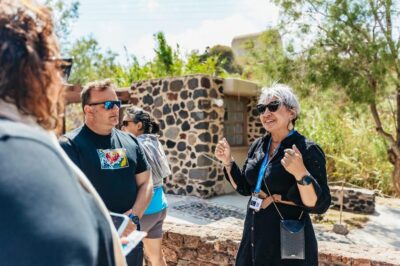
Private Cultural Villages Sightseeing & Akrotiri Excavations
Read our review →

Private Group Visit to Akrotiri & 3 Wineries with Tastings
Read our review →
Browse the lists this tour appears in